I've sat through enough bridal-party manicure appointments before a wedding to know which designs survive a ten-hour reception full of hugging and champagne toasts, and which ones chip by the ceremony. Short french tips, it turns out, win almost every time — the nail is short enough to resist snagging on a veil or a cake knife, and the design reads as finished without looking fussy in photos. These seven versions cover everything from a bride's wedding-day hands to a Tuesday you just want to feel a little more put together.
The Bridal Floral French
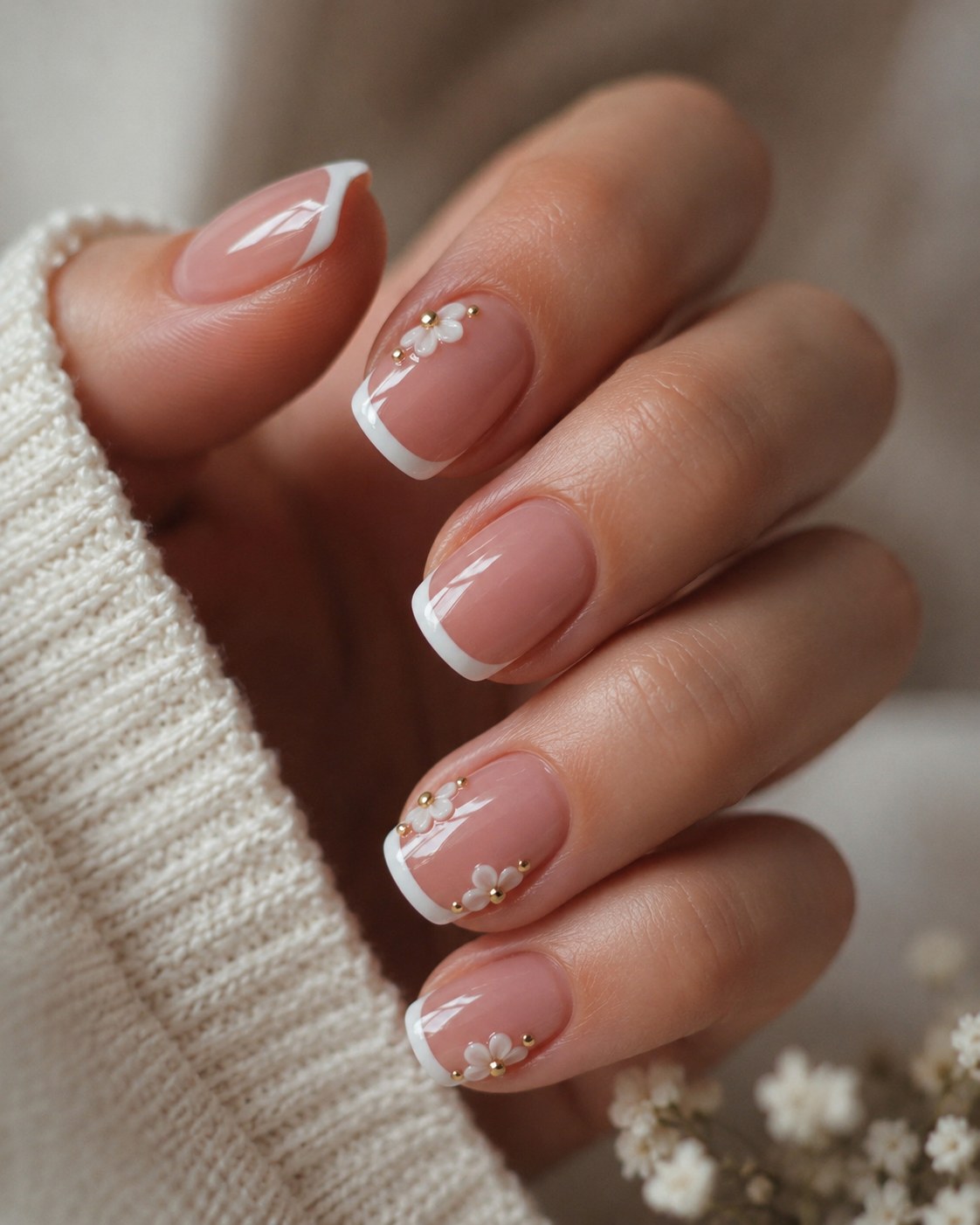
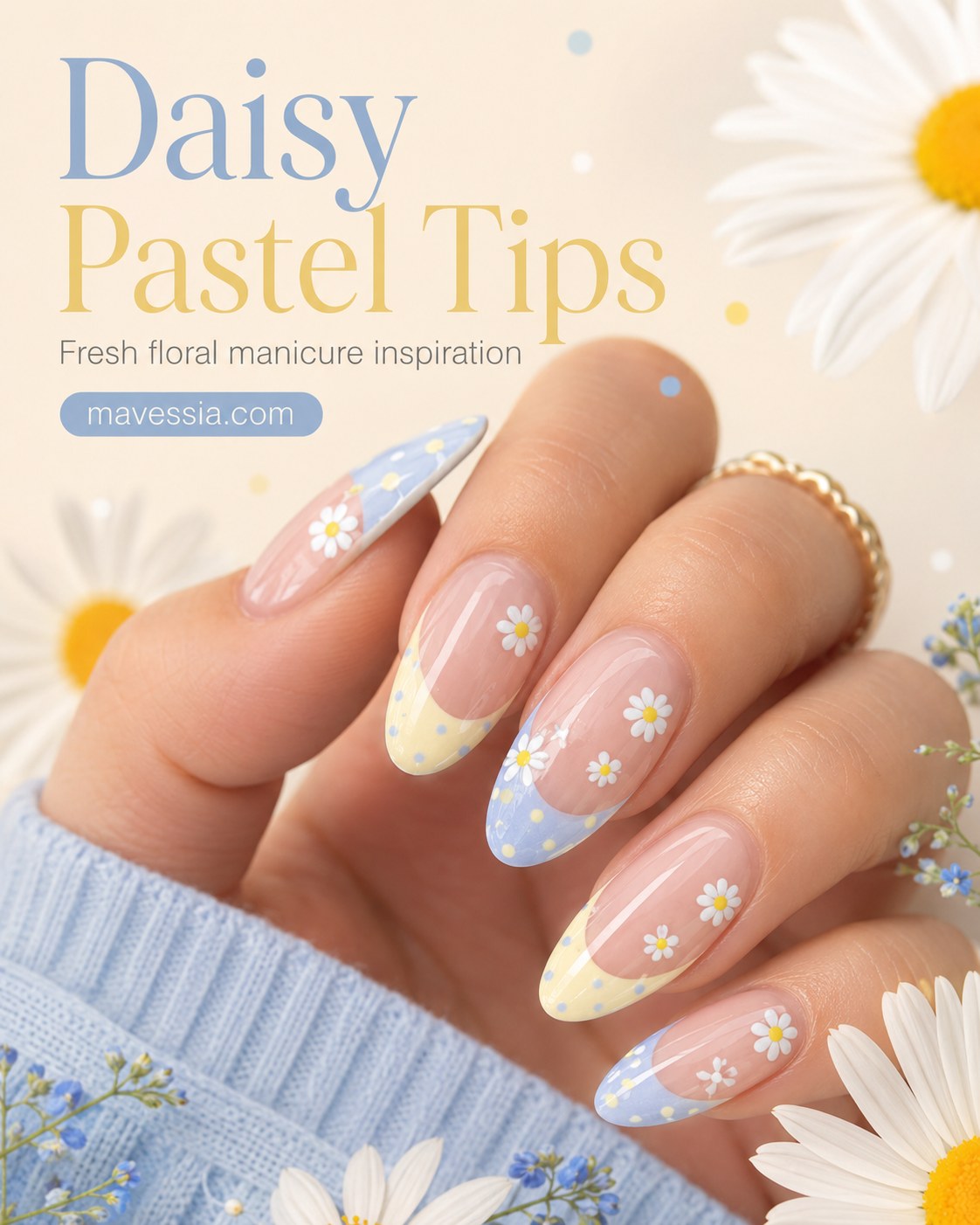
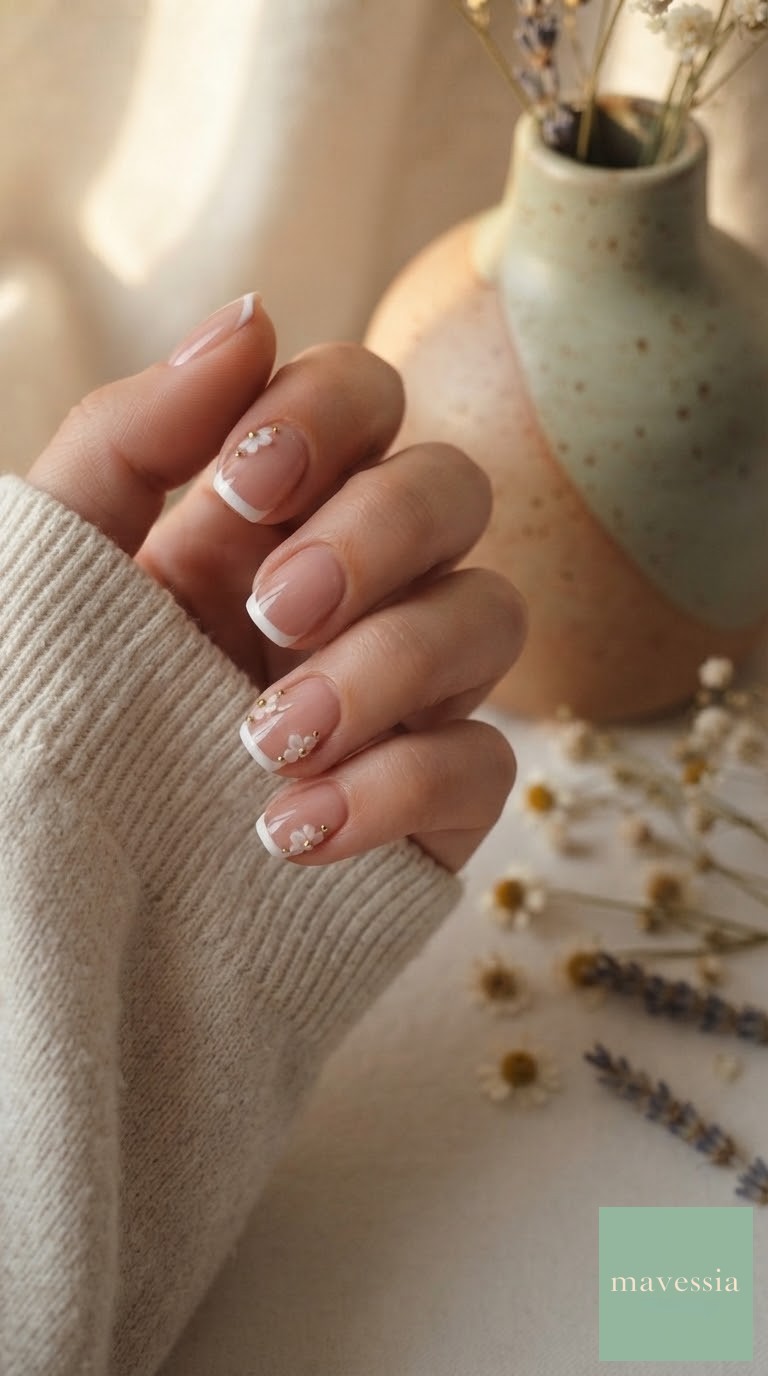
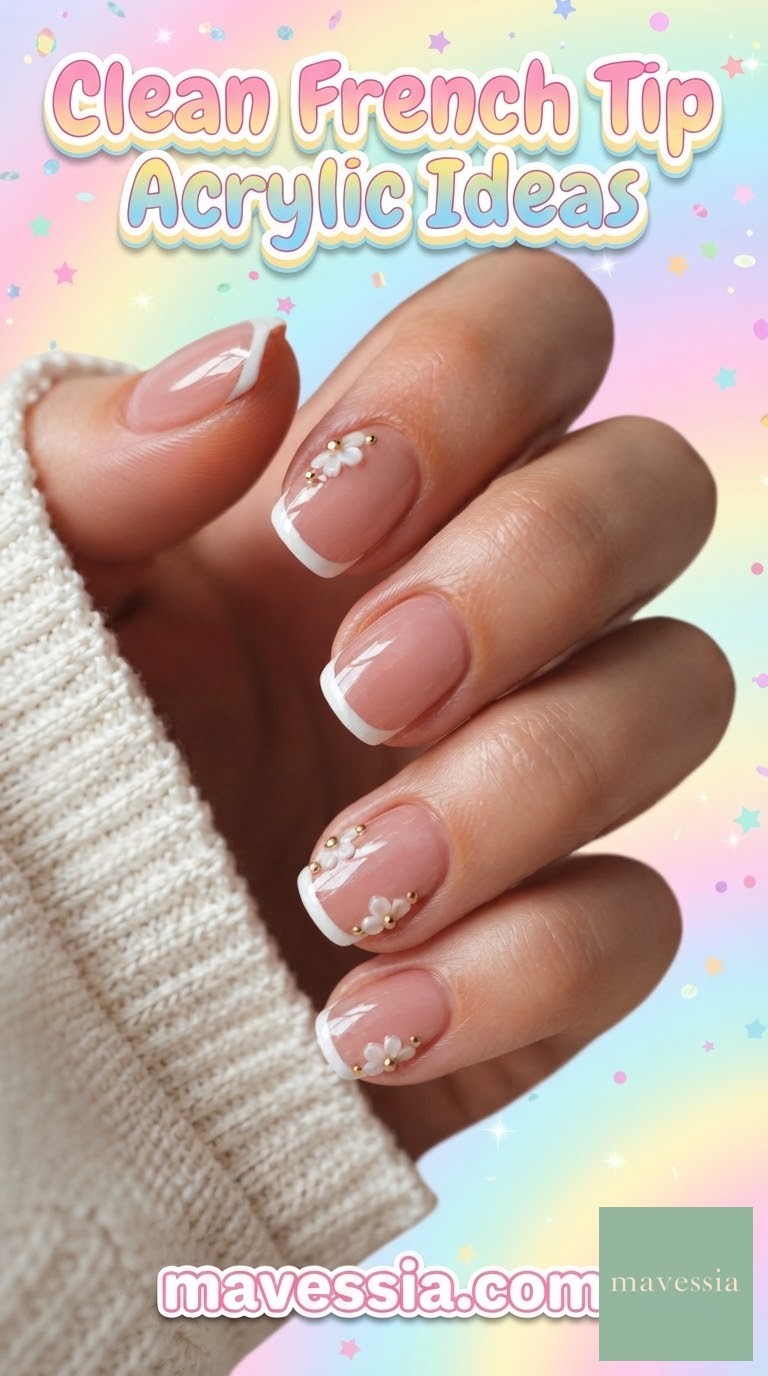
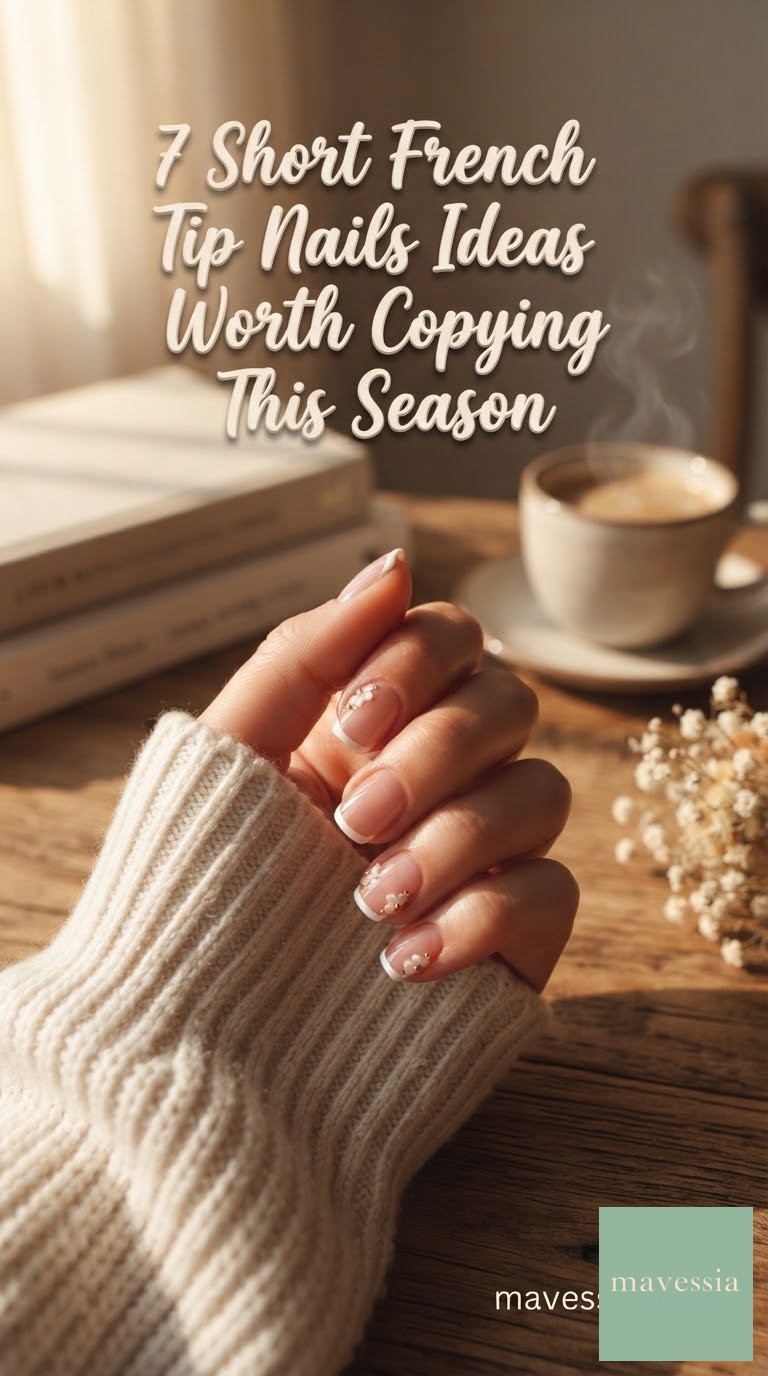
This is the one I point brides toward when they want their hands to look intentional in the ring shot without competing with the bouquet. The classic white tip stays crisp and thin, but one or two accent nails get tiny pressed-flower details and gold micro-beads instead of the full french treatment across all ten fingers.
Why it works: restraint. A wedding day already has a lot going on — florals on the tips echo the florals in the room without turning the hand into a second centerpiece.
- Best for: brides, bridesmaids, or anyone attending a spring or garden wedding
- Tell your tech: classic french base, floral accent on ring finger only, gold caviar beads for texture
- Maintenance: gel application holds this shape a full two to three weeks without the tip yellowing
The rule I give every bridal party: pick the accent detail before the wedding morning, never during. Nobody needs to be deciding on nail art an hour before the first look.
The Dopamine French
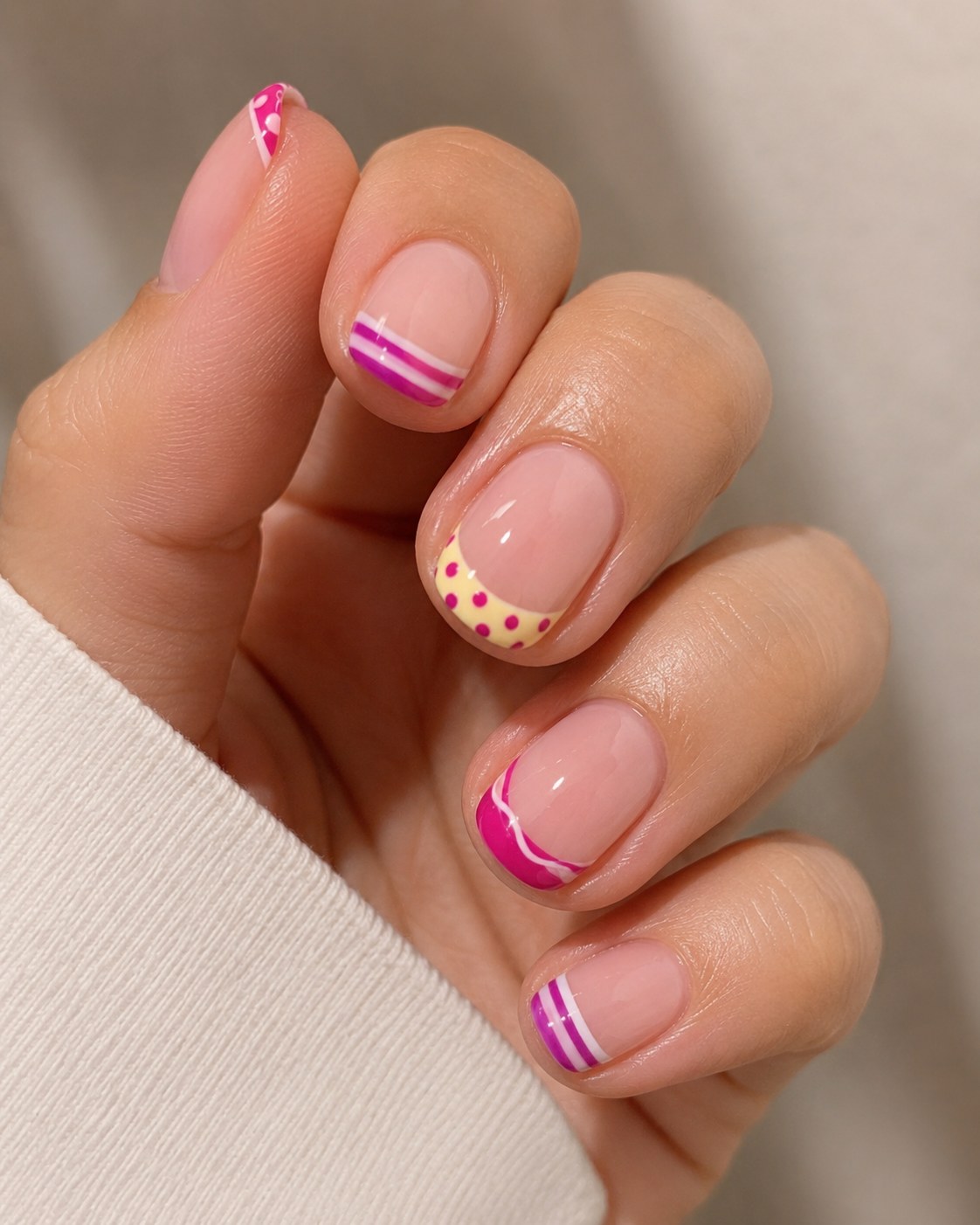
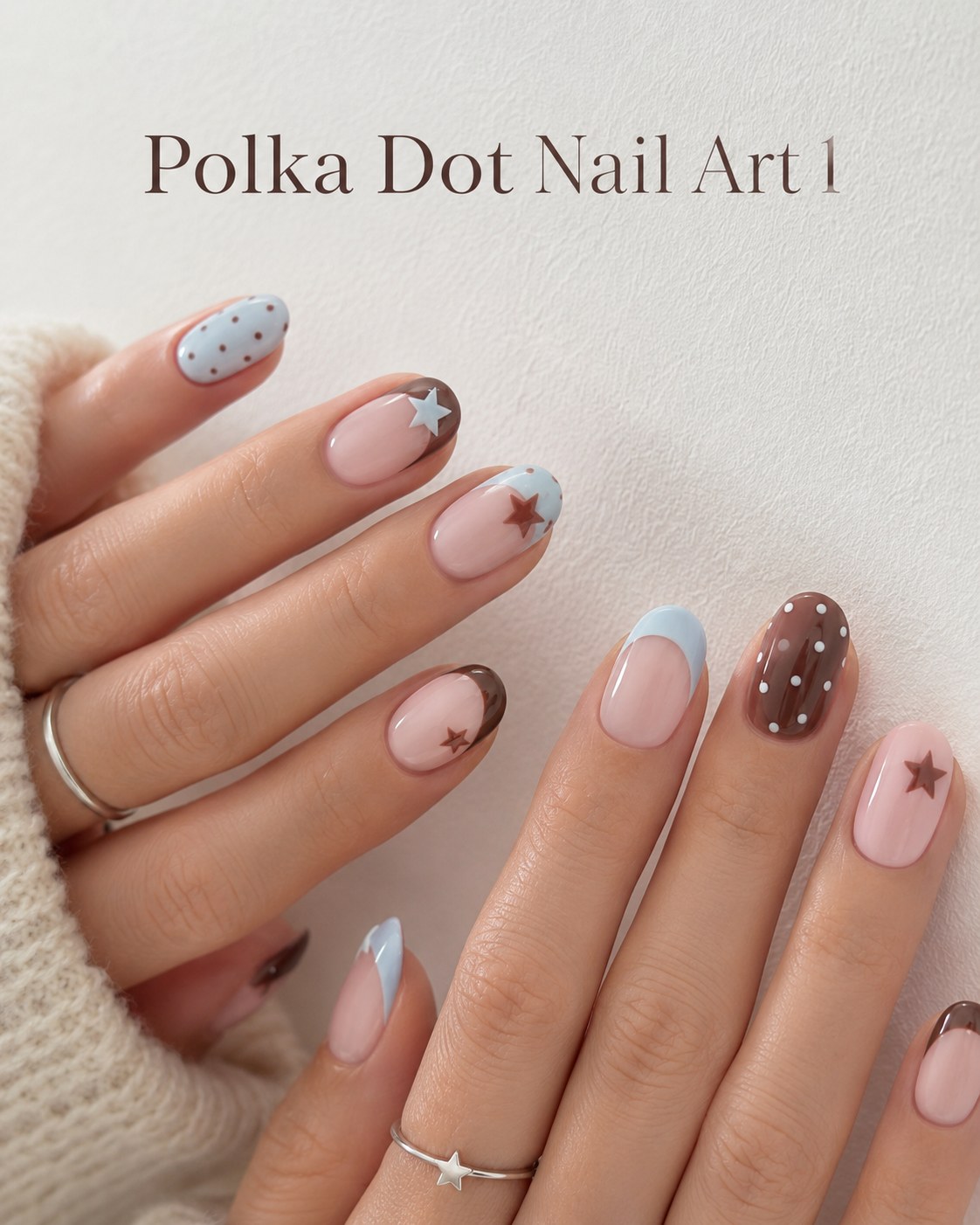
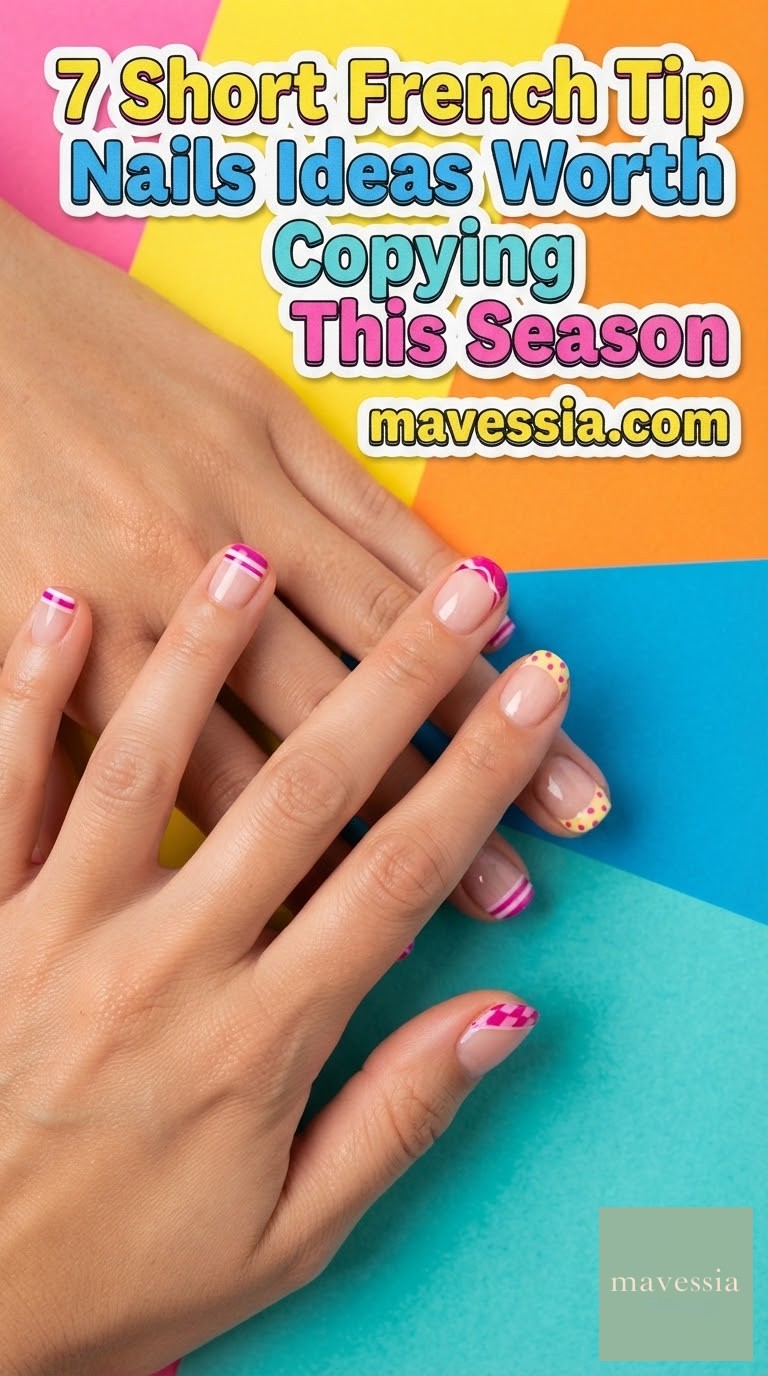
Trade the neutral base for something with actual personality. Here the french line goes bright pink and doubled with a fine stripe, one nail flips the color script entirely with a golden polka-dot moon, and the whole set reads like it was styled by someone who owns a lot of good earrings.
This is my go-to recommendation for a milestone birthday or a bridal shower where the guest of honor wants her hands to match the party, not disappear into a neutral crowd. It photographs beautifully against a bright cake table too, for what it's worth.
- Best for: birthdays, showers, anyone bored of beige
- Color swap idea: match the tip color to your event's palette instead of copying pink exactly
- Longevity note: the mismatched-nail approach actually hides regrowth better than a uniform french, since your eye isn't tracking one repeated line
The Micro-Line French
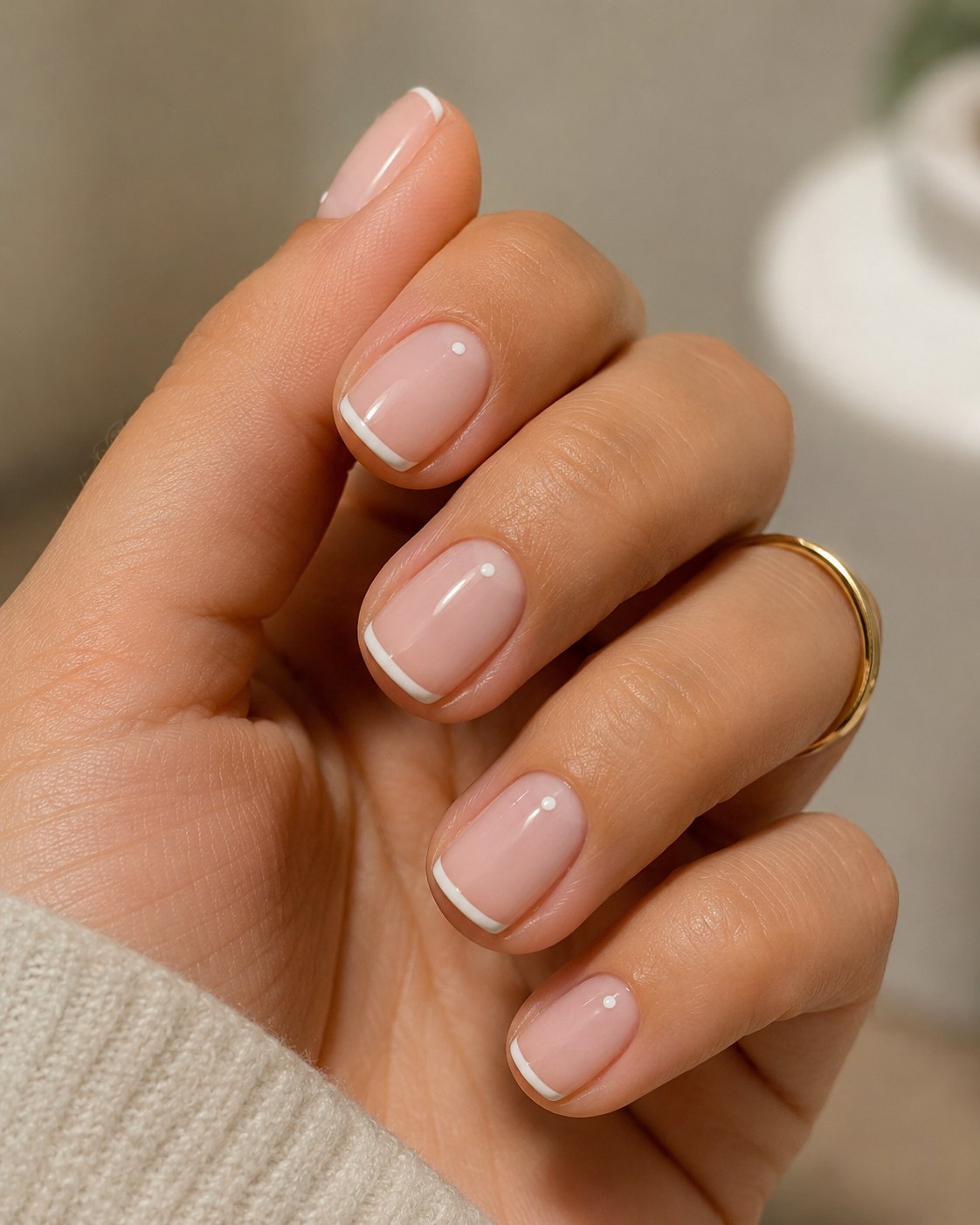
If the classic french always felt a touch loud to you, this is the quieter cousin. The white line is drawn thin — almost hairline — leaving far more of the natural pink nail bed visible than a traditional french tip. It's the manicure I recommend most often to clients who need their hands in a lot of meetings the week before an event and don't want anything shouting for attention.
Who it flatters
Shorter, squarer nail beds especially, because the thin line elongates the nail visually instead of chopping it off with a thick white block. It also grows out with almost no maintenance panic — there's so little white to begin with that regrowth barely registers for three-plus weeks.
What to say at the salon: ask for a "micro french" or "skinny french" specifically — regular french request will usually get you a thicker line by default.
The Line-Art French
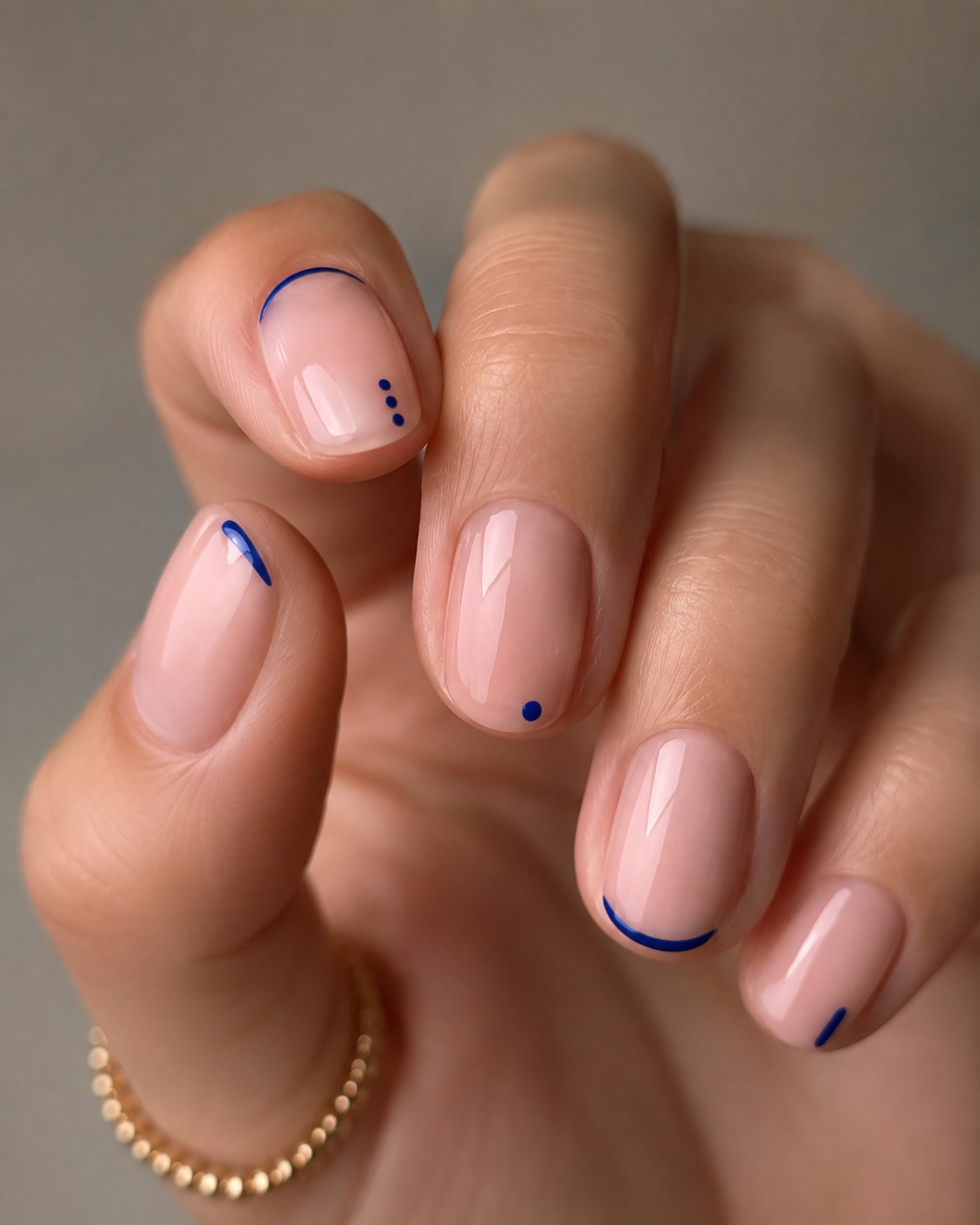
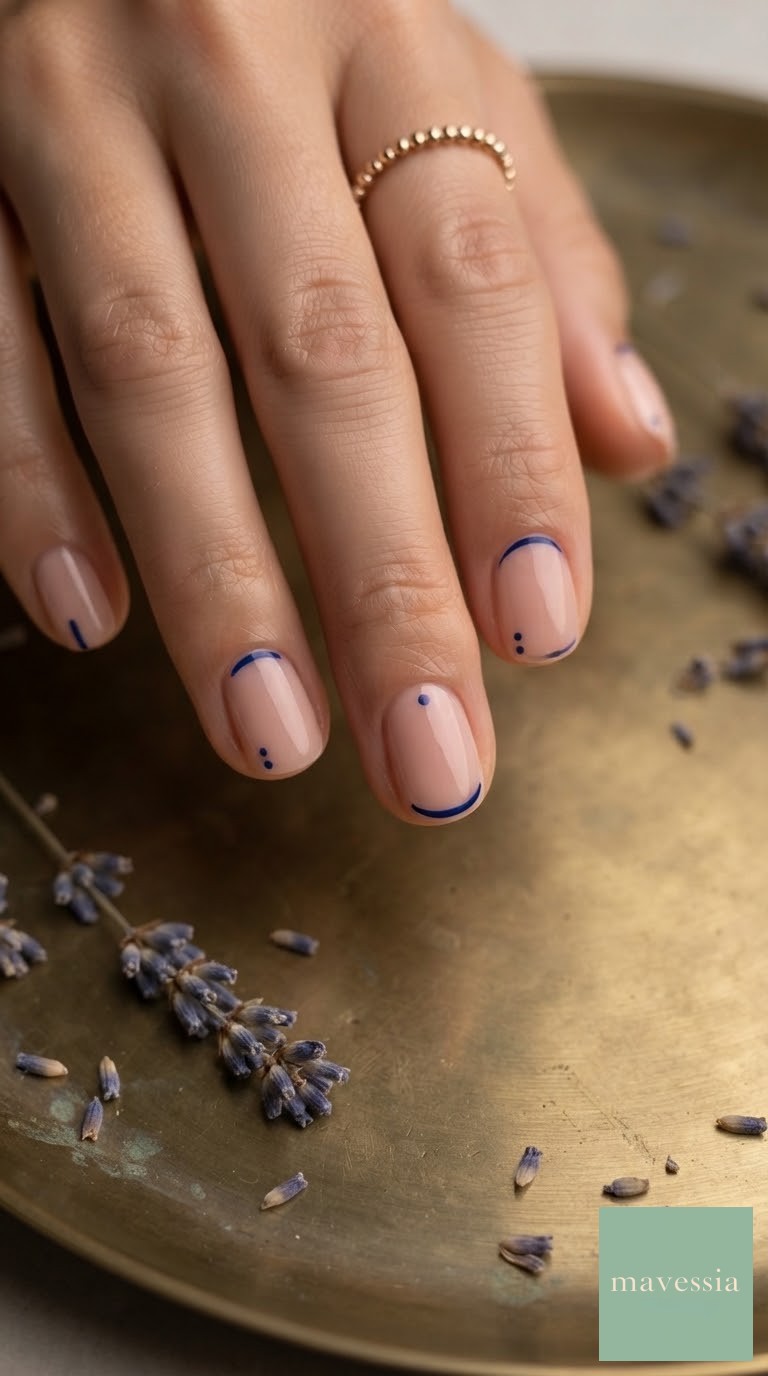
This one throws out the tip line altogether and replaces it with abstract navy strokes and dots placed asymmetrically across a nude base. It's less a french manicure than a french-adjacent idea — proof the category has room to stretch.
- Start with a sheer nude base so the dark line art reads clean against skin, not muddy.
- Vary the placement nail to nail — a curved line here, three stacked dots there — rather than repeating the same motif ten times.
- Keep the color story to one shade so it looks curated instead of busy.
I'd steer a client toward this for a rehearsal dinner or an engagement party rather than the wedding day itself — it's a little too editorial for some traditional dress codes, but it's exactly the kind of detail a photographer will zoom in on for the invitation flat-lay.
The Classic Bridal French
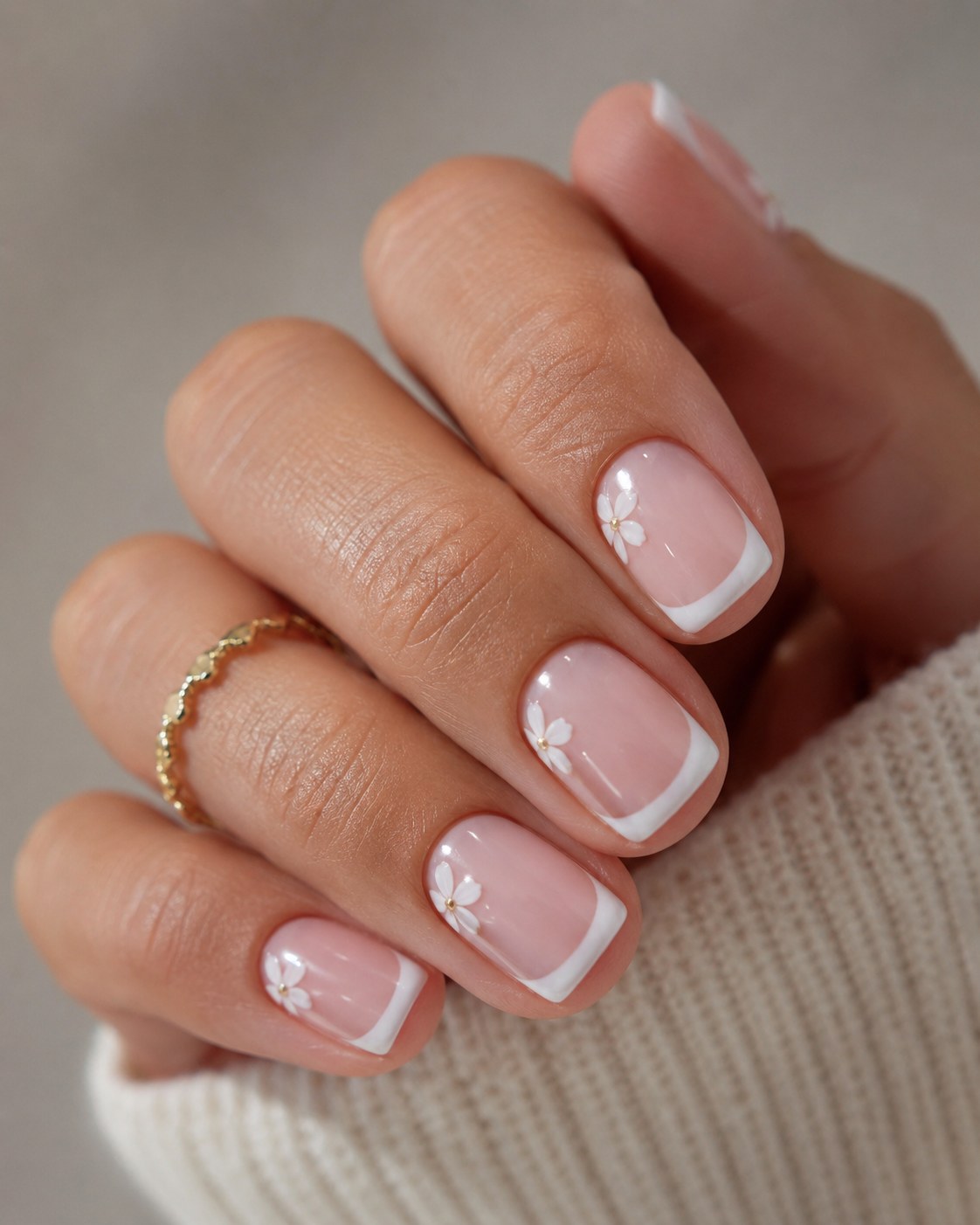
No florals, no color story, no line art — just a clean, opaque white tip on a natural pink base, with one small hand-painted bow standing in as the only ornament. This is the manicure I book for a bride who has told me, in some version of these words, "I don't want anything that will look dated in the photos in twenty years."
She's not wrong to want that. A true french tip has outlasted every nail trend of the last three decades because it photographs like jewelry, not like a fashion moment.
- Best for: traditional weddings, job interviews, any event where you want your hands to disappear into the background of the photo in the best way
- Shape pairing: a soft square or squoval tip keeps the white line straight and even
- Salon time: budget about 45 minutes for gel — this is a fast, low-drama appointment
The Pastel Rainbow French
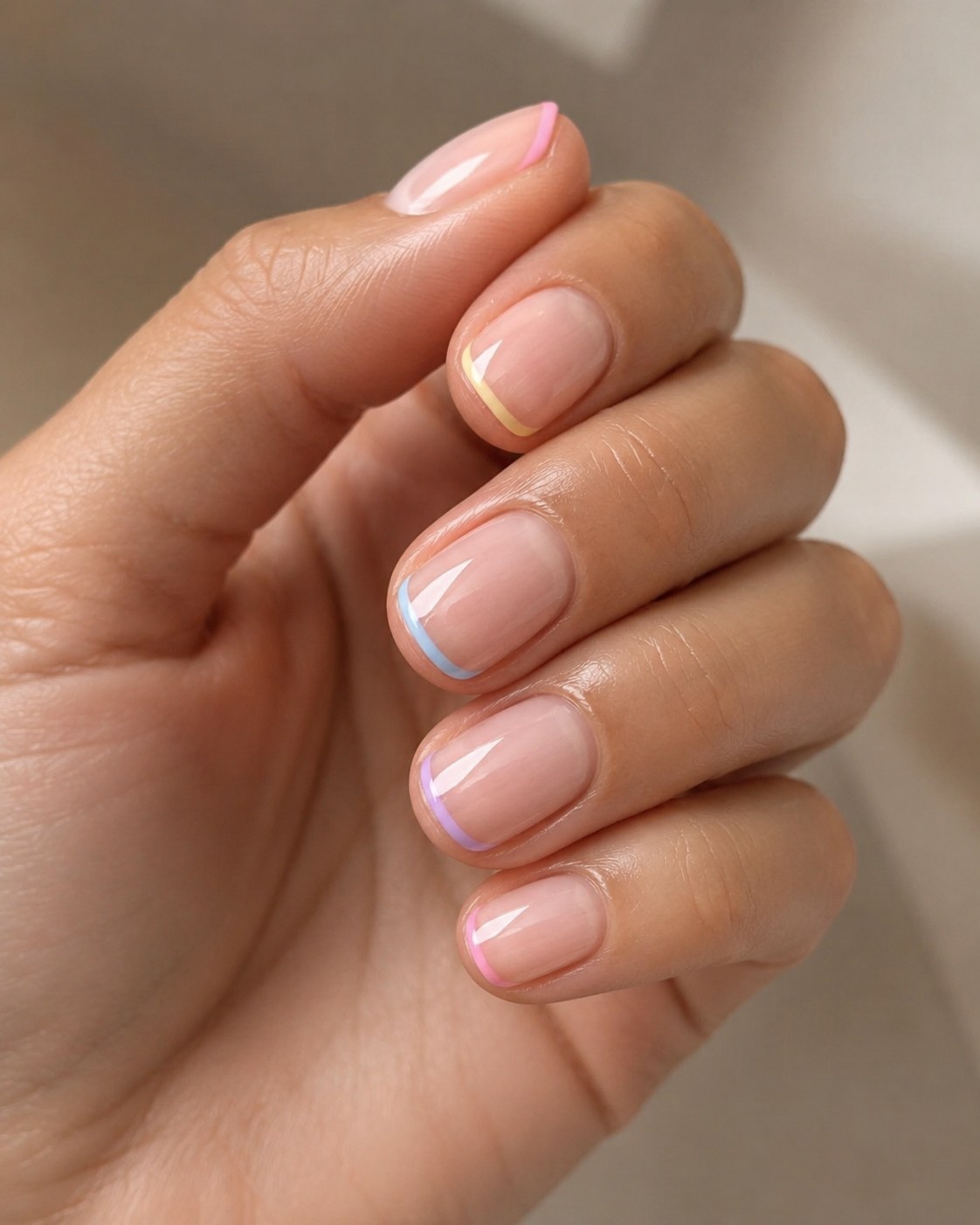
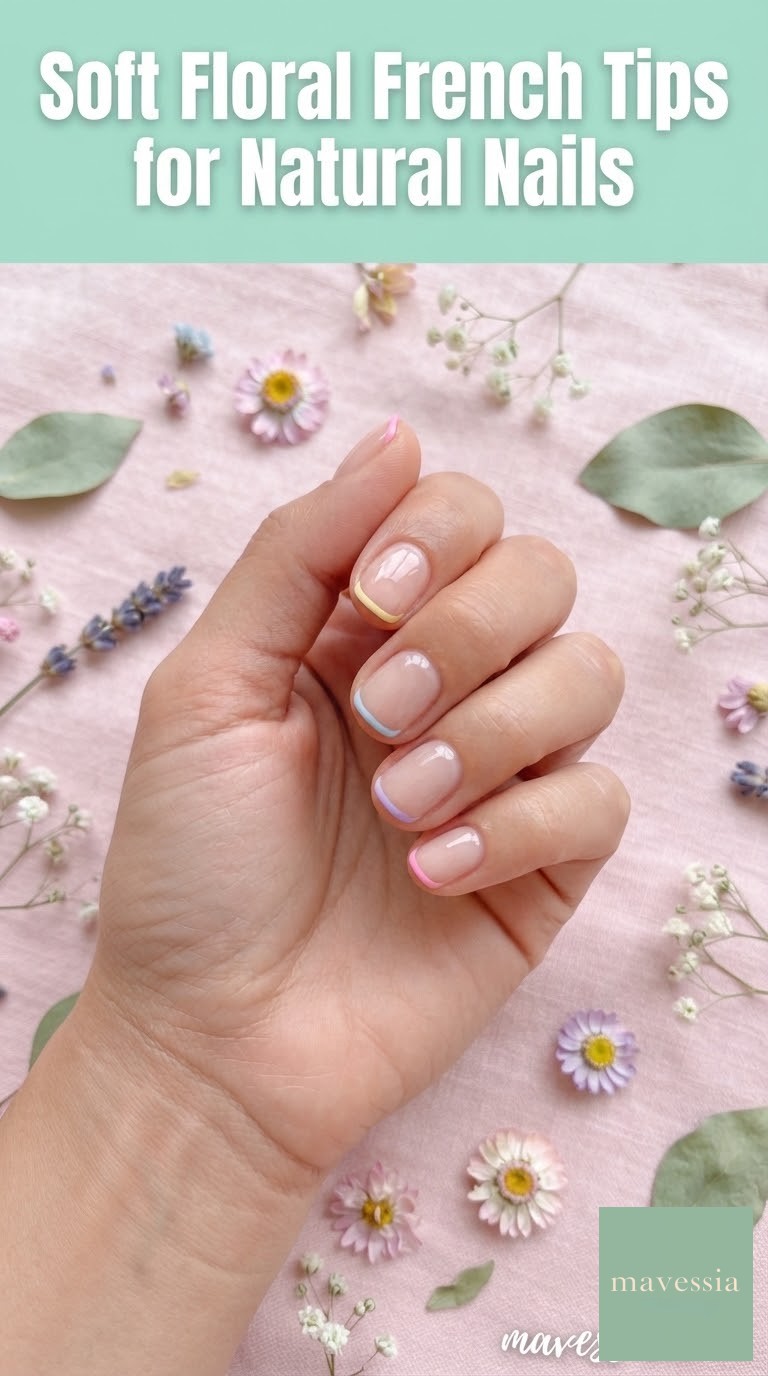
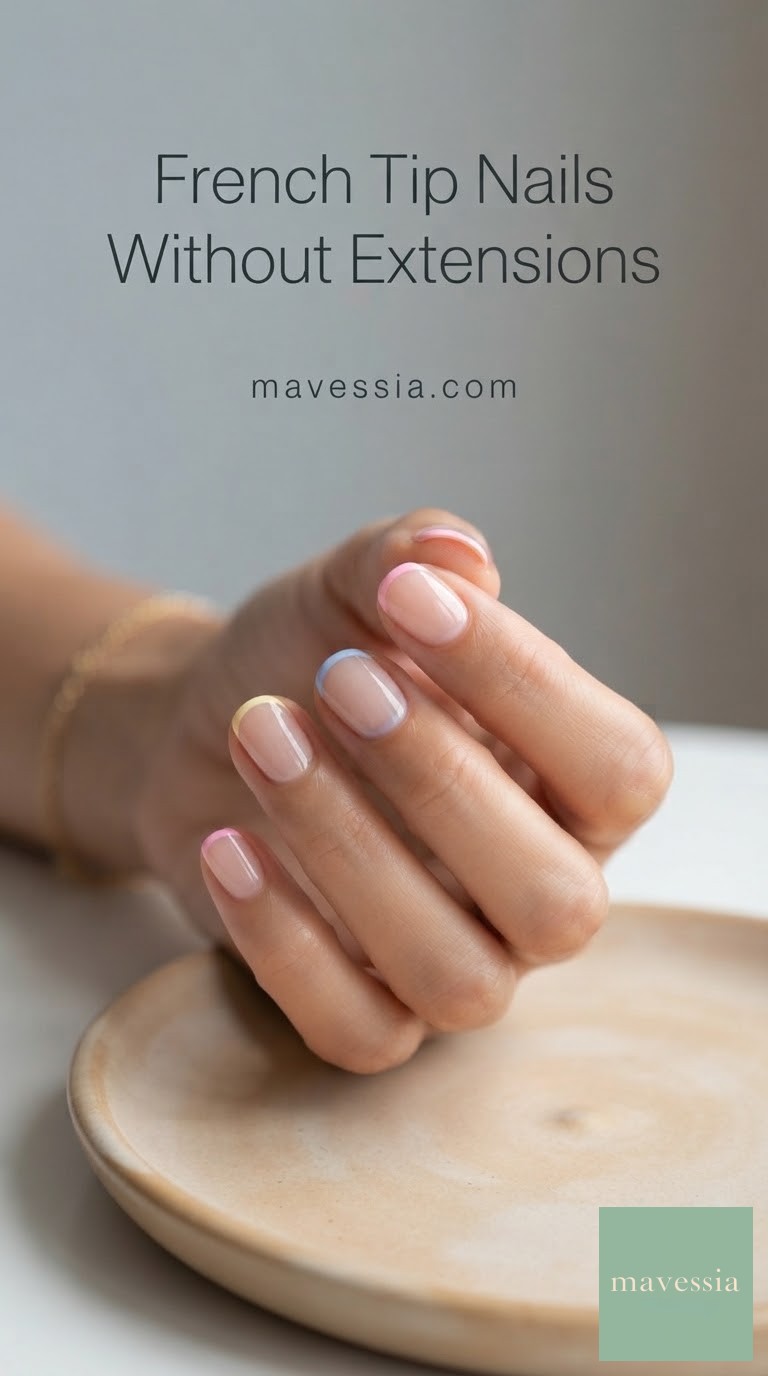
Each nail gets its own soft tip color — a pale pink here, a buttery yellow there, a whisper of lavender on the next — so the overall effect is a french manicure that's been run through a watercolor filter. It's cheerful without tipping into costume-y, because the pastels stay muted and the base color stays consistent across the whole hand.
Why I keep recommending it for spring gatherings: it works on literally any outfit color, since no single tip shade has to match anything you're wearing.
- Best for: Easter, garden parties, bridal showers, or a first warm-weather weekend
- Tech tip: ask for the pastels to be sheer, not opaque, so they layer softly instead of looking like five separate manicures glued together
- Pairs well with: minimal jewelry — let the hand be the color moment
The Vintage Polka Dot French
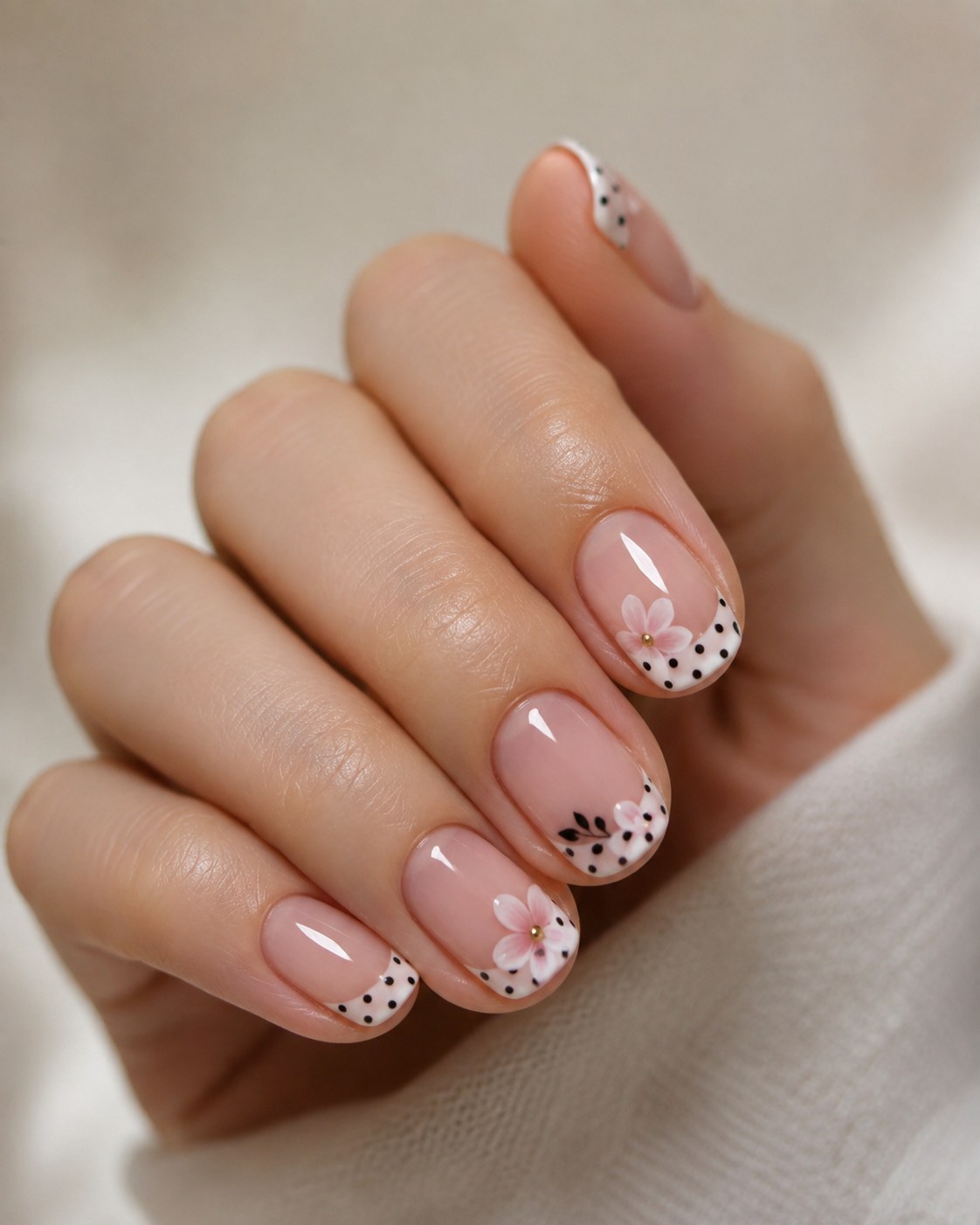
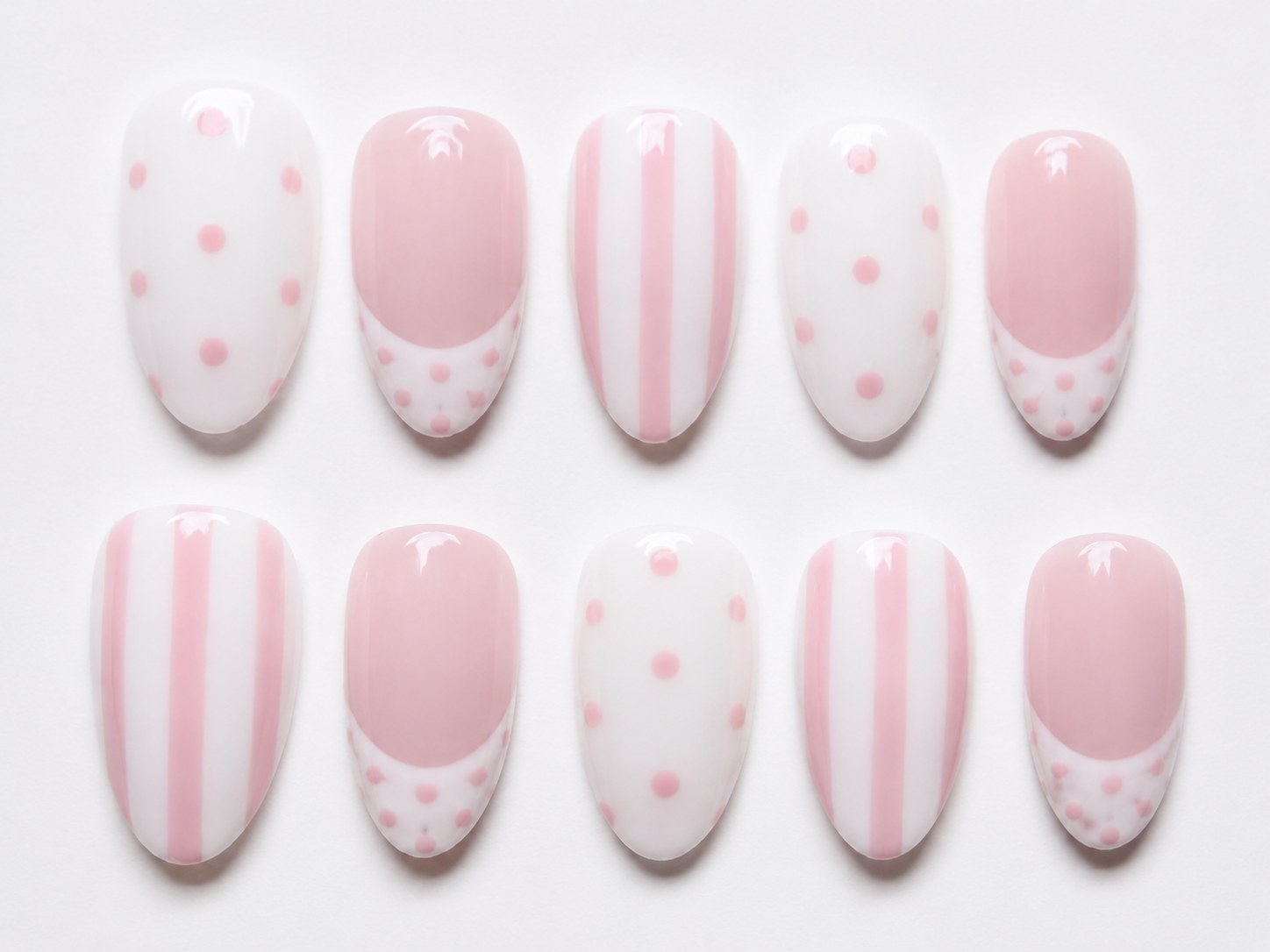
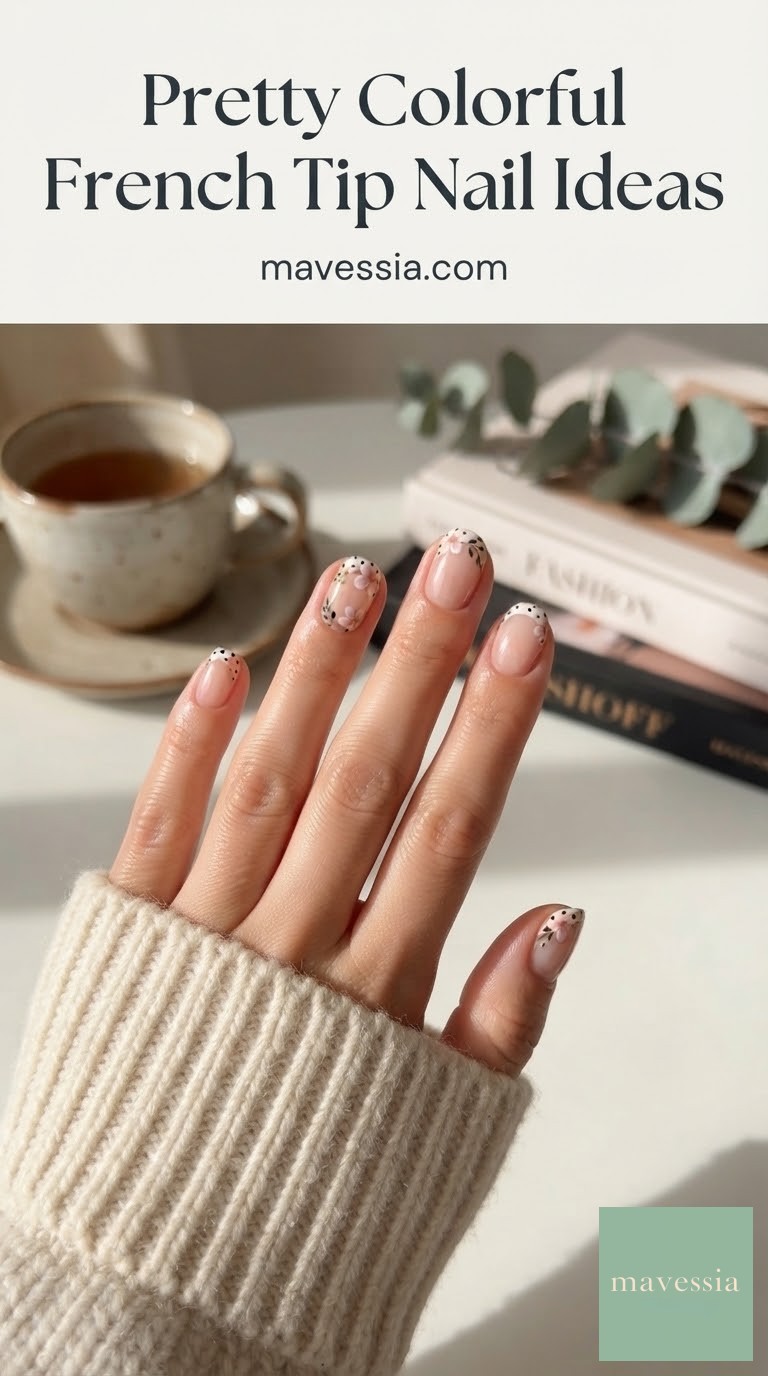
Fine black polka dots scattered along a soft white tip, with a few tiny painted flowers layered in near the cuticle — this is the most detailed, most obviously hand-painted design in the group, and it reads like something out of a 1950s photograph rather than a current trend cycle.
It takes real time at the nail bar, so I'd file this under a special-occasion booking rather than a quick fill-in appointment. Think engagement party, a milestone anniversary dinner, or a bridal shower with a vintage theme.
- Best for: anyone hosting or attending a retro-styled event
- Appointment length: plan for 90 minutes to two hours given the hand-painted detail
- Keep it fresh: a top coat reapplied every four to five days on the accent nails will protect the fine painted lines from chipping first
None of these require a special-occasion budget or a two-hour salon slot to feel worth it — even the classic version, done well, makes your hands look like you planned something. Pick the one that matches what's actually on your calendar this month, not the one with the most likes.


Common Questions
How short is 'short' for a french manicure?
I'm talking about a nail that barely clears the fingertip — squoval or soft square, no more than a couple millimeters of white space. It's the length I recommend to any bride or bridesmaid who'll be handling a bouquet, cutting cake, or wrangling a toddler at the reception.
Do short french tips last as long as a plain manicure?
In my experience, longer. Less nail length means less leverage to chip the tip, and the shorter free edge holds up through a full ten-hour wedding day better than most of the long, elaborate sets I've seen in getting-ready suites.
Which of these is right for a nervous first-time bride?
The classic bridal french with the single bow accent. It photographs timelessly, it's the fastest appointment on this list, and it won't compete with anything else she's wearing that day.